Category: News

  • Christian Haddad presents work at EISAPEC-2025 

    Christian Haddad presents work at EISAPEC-2025 

    27.08.2025

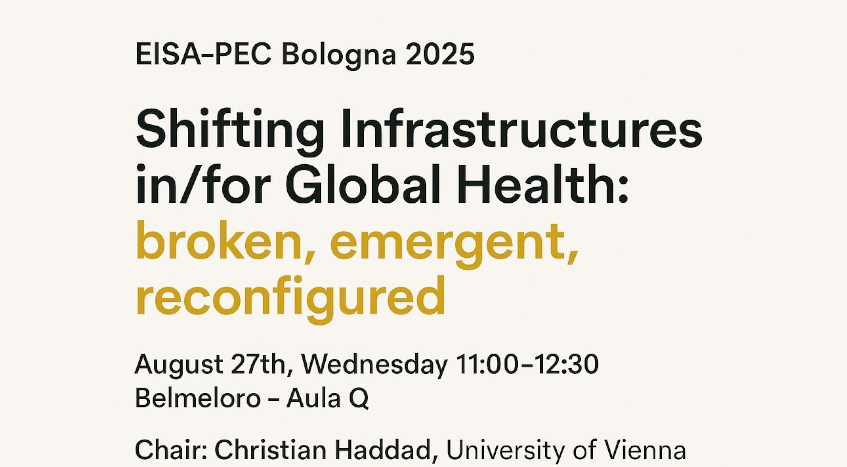
    ALTERBIOTIC PI Christian Haddad chaired a panel entitled ‘Shifting infrastructure of/for/in Global health:  broken, emergent, reconfigured’ as part of the European International Studies Association Pan-European Conference (EISAPEC25) in Bologna, August 26-29, 2025. 

    The panel investigated how infrastructures evolve, adapt, and transform in response to shifting global health challenges, and how these changes, in turn, impact the infrastructures themselves.  
     
    Christian contributed a paper that reports ongoing research from ALTERBIOTIC, asking how the antibiotic R&D ecosystem should be considered a vital global health infrastructure. 

  • ALTERBIOTIC team members join MAE 2025 Conference

    ALTERBIOTIC team members join MAE 2025 Conference

    17.09.2025 

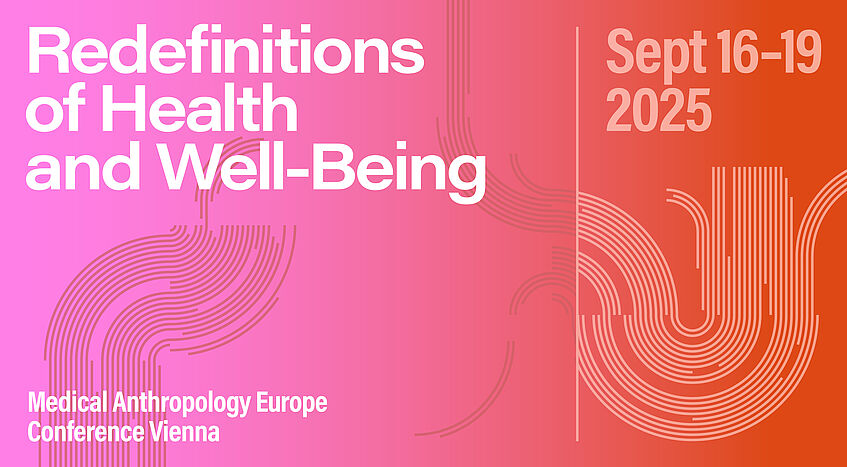
    This year saw the Medical Anthropology Conference Europe arrive in Vienna – an opportunity not to be missed by the ALTERBIOTIC team. The conference brought together researchers from across Europe and beyond, to discuss how shifting definitions of health and wellbeing are shaping medical practices, policies, and everyday life. 

    ALTERBIOITIC’s  Kirstin Bentley joined the conference with an open eye to ongoing anthropological work on themes relevant to ALTERBIOTIC – here is Kirsty’s digest:  

    Medical Anthropology as a discipline provides a powerful lens through which to examine how health and wellbeing are understood and experienced across different cultural and social settings. This perspective is important for understanding antimicrobial resistance, which goes beyond biology and medicine to involve social influences and changes in behaviour. 

    Kirsty’s highlights of the conference were the talks, “The Microbiome Multiple”, which tracked the manufacture story of the microbiome, and “Medical anthropologists in global ‘One Health’ assemblages”, wherein key insights were provided into the adoption of the One Health scheme in Kenya, Sierra Leone and Switzerland. 

    Kirsty also partook in a laboratory session, “Sensory Engagements with Microbes”, led by César Giraldo Herrera, which offered a thoughtful rethinking of human-microbe relations through sensory practices such as vision – challenging participants to question notions of ‘objective vision’ and what is deemed as ‘scientific’, ‘truthful’, or ‘neutral’ observation.  

    We look forward to more fruitful discussions with scholars in the field of Medical Anthropology and thank the organisers and speakers for an interesting and insightful few days! 
  • GPSS Series on Antimicrobial Resistance: Innovation Challenges for Viable Futures 

    GPSS Series on Antimicrobial Resistance: Innovation Challenges for Viable Futures 

    10.06.2025 

    As part of the Global Pharmaceutical & Society Studies (GPSS) webinar series, Christian Haddad presented the ALTERBIOTIC project and its key research objectives, alongside a thorough conceptualization of the antibiotic innovation crisis. Social science research – and especially perspectives form Science & Technology Studies (STS) — are indispensable to grasp this crisis, as pharmaceutical innovation are not just technical issues to be fixed by technical means, but are embedded in broader social, cultural, economic and institutional regimes and frameworks.  

    Alongside Christian were fellow speakers Dr Rohit Malpani, senior advisor to the Global Antibiotic Research and Development Partnership (GARDP), and Dr Vasanthi Ramachandran, Vice President of BUGWORKS Research India.  

    Dr Malpani discussed the discrepancies between framing the AMR crisis as a public health, or as an innovation failure, highlighting the real-world impact of public-private partnerships like GARDP in reshaping the innovation landscape. Meanwhile, Dr Ramachandran provided a glimpse into the research conducted at BUGWORKS – including the use of cutting-edge AI technology to revolutionise drug discovery – reflecting on the pivotal role of small companies  in addressing the AMR crisis. Main challenges persist for small companies in the need to diversify funding partners and collaborators.